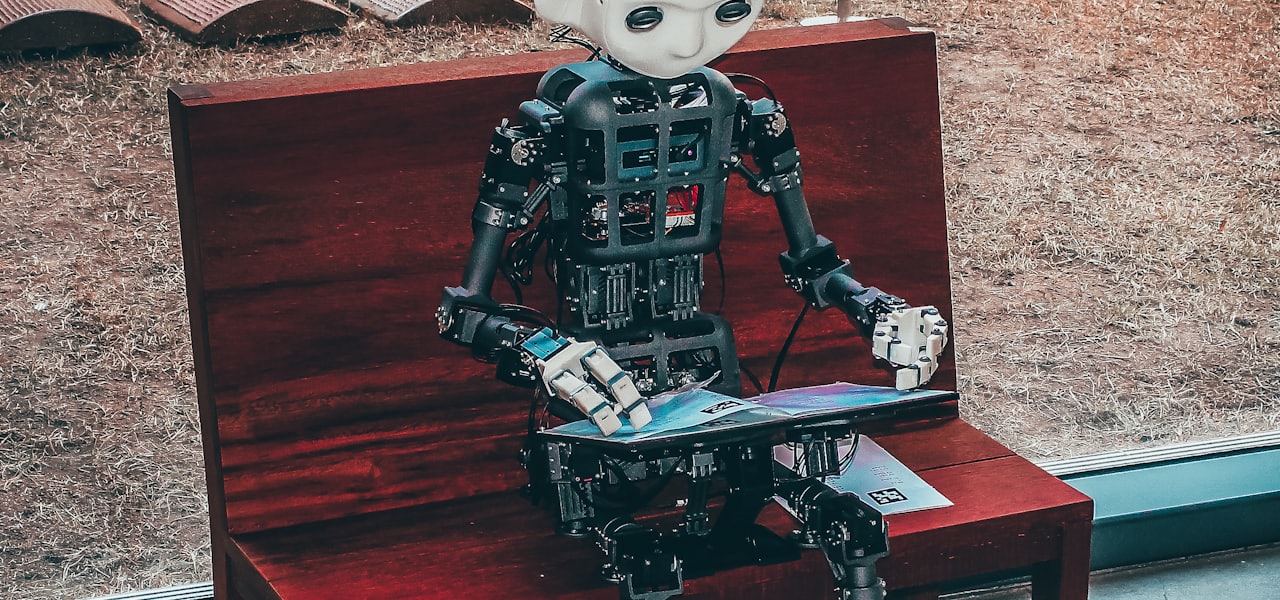
The following is a list of current and past, non-classified notable artificial intelligence projects. == Specialized projects == === Brain-inspired === Blue Brain Project, an attempt to create a synthetic brain by reverse-engineering the mammalian brain down to the molecular level. Google Brain, a deep learning project part of Google X attempting to have intelligence similar or equal to human-level. Human Brain Project, ten-year scientific research project, based on exascale supercomputers. === Cognitive architectures === 4CAPS, developed at Carnegie Mellon University under Marcel A. Just ACT-R, developed at Carnegie Mellon University under John R. Anderson. AIXI, Universal Artificial Intelligence developed by Marcus Hutter at IDSIA and ANU. CALO, a DARPA-funded, 25-institution effort to integrate many artificial intelligence approaches (natural language processing, speech recognition, machine vision, probabilistic logic, planning, reasoning, many forms of machine learning) into an AI assistant that learns to help manage your office environment. CHREST, developed under Fernand Gobet at Brunel University and Peter C. Lane at the University of Hertfordshire. CLARION, developed under Ron Sun at Rensselaer Polytechnic Institute and University of Missouri. CoJACK, an ACT-R inspired extension to the JACK multi-agent system that adds a cognitive architecture to the agents for eliciting more realistic (human-like) behaviors in virtual environments. Copycat, by Douglas Hofstadter and Melanie Mitchell at the Indiana University. DUAL, developed at the New Bulgarian University under Boicho Kokinov. FORR developed by Susan L. Epstein at The City University of New York. IDA and LIDA, implementing Global Workspace Theory, developed under Stan Franklin at the University of Memphis. OpenCog Prime, developed using the OpenCog Framework. Procedural Reasoning System (PRS), developed by Michael Georgeff and Amy L. Lansky at SRI International. Psi-Theory developed under Dietrich Dörner at the Otto-Friedrich University in Bamberg, Germany. Soar, developed under Allen Newell and John Laird at Carnegie Mellon University and the University of Michigan. Society of Mind and its successor The Emotion Machine proposed by Marvin Minsky. Subsumption architectures, developed e.g. by Rodney Brooks (though it could be argued whether they are cognitive). === Games === AlphaGo, software developed by Google that plays the Chinese board game Go. Chinook, a computer program that plays English draughts; the first to win the world champion title in the competition against humans. Deep Blue, a chess-playing computer developed by IBM which beat Garry Kasparov in 1997. Halite, an artificial intelligence programming competition created by Two Sigma in 2016. Libratus, a poker AI that beat world-class poker players in 2017, intended to be generalisable to other applications. The Matchbox Educable Noughts and Crosses Engine (sometimes called the Machine Educable Noughts and Crosses Engine or MENACE) was a mechanical computer made from 304 matchboxes designed and built by artificial intelligence researcher Donald Michie in 1961. Quick, Draw!, an online game developed by Google that challenges players to draw a picture of an object or idea and then uses a neural network to guess what the drawing is. The Samuel Checkers-playing Program (1959) was among the world's first successful self-learning programs, and as such a very early demonstration of the fundamental concept of artificial intelligence (AI). Stockfish AI, an open source chess engine currently ranked the highest in many computer chess rankings. TD-Gammon, a program that learned to play world-class backgammon partly by playing against itself (temporal difference learning with neural networks). === Internet activism === Serenata de Amor, project for the analysis of public expenditures and detect discrepancies. === Knowledge and reasoning === Alice (Microsoft), a project from Microsoft Research Lab aimed at improving decision-making in Economics Braina, an intelligent personal assistant application with a voice interface for Windows OS. Cyc, an attempt to assemble an ontology and database of everyday knowledge, enabling human-like reasoning. Eurisko, a language by Douglas Lenat for solving problems which consists of heuristics, including some for how to use and change its heuristics. Google Now, an intelligent personal assistant with a voice interface in Google's Android and Apple Inc.'s iOS, as well as Google Chrome web browser on personal computers. Holmes a new AI created by Wipro. Microsoft Cortana, an intelligent personal assistant with a voice interface in Microsoft's various Windows 10 editions. MindsDB, is an AI automation platform for building AI/ML powered features and applications. Mycin, an early medical expert system. Open Mind Common Sense, a project based at the MIT Media Lab to build a large common sense knowledge base from online contributions. Siri, an intelligent personal assistant and knowledge navigator with a voice-interface in Apple Inc.'s iOS and macOS. SNePS, simultaneously a logic-based, frame-based, and network-based knowledge representation, reasoning, and acting system. Viv (software), a new AI by the creators of Siri. Wolfram Alpha, an online service that answers queries by computing the answer from structured data. === Motion and manipulation === AIBO, the robot pet for the home, grew out of Sony's Computer Science Laboratory (CSL). Cog, a robot developed by MIT to study theories of cognitive science and artificial intelligence, now discontinued. === Music === Melomics, a bioinspired technology for music composition and synthesization of music, where computers develop their own style, rather than mimic musicians. === Natural language processing === AIML, an XML dialect for creating natural language software agents. Apache Lucene, a high-performance, full-featured text search engine library written entirely in Java. Apache OpenNLP, a machine learning based toolkit for the processing of natural language text. It supports the most common NLP tasks, such as tokenization, sentence segmentation, part-of-speech tagging, named entity extraction, chunking and parsing. Artificial Linguistic Internet Computer Entity (A.L.I.C.E.), a natural language processing chatterbot. ChatGPT, a chatbot built on top of OpenAI's GPT-3.5 and GPT-4 family of large language models. Claude, a family of large language models developed by Anthropic and launched in 2023. Claude LLMs achieved high coding scores in several recognized LLM benchmarks. Cleverbot, successor to Jabberwacky, now with 170m lines of conversation, Deep Context, fuzziness and parallel processing. Cleverbot learns from around 2 million user interactions per month. DeepSeek: Chinese chatbot funded by hedge fund High-Flyer. DBRX, 136 billion parameter open sourced large language model developed by Mosaic ML and Databricks. ELIZA, a famous 1966 computer program by Joseph Weizenbaum, which parodied person-centered therapy. FreeHAL, a self-learning conversation simulator (chatterbot) which uses semantic nets to organize its knowledge to imitate a very close human behavior within conversations. Gemini, a family of multimodal large language model developed by Google's DeepMind. Drives the Gemini chatbot, formerly known as Bard. GigaChat, a chatbot by Russian Sberbank. GPT-3, a 2020 language model developed by OpenAI that can produce text difficult to distinguish from that written by a human. Jabberwacky, a chatbot by Rollo Carpenter, aiming to simulate natural human chat. LaMDA, a family of conversational neural language models developed by Google. LLaMA, a 2023 language model family developed by Meta that includes 7, 13, 33 and 65 billion parameter models.[1] Mycroft, a free and open-source intelligent personal assistant that uses a natural language user interface. PARRY, another early chatterbot, written in 1972 by Kenneth Colby, attempting to simulate a paranoid schizophrenic. SHRDLU, an early natural language processing computer program developed by Terry Winograd at MIT from 1968 to 1970. SYSTRAN, a machine translation technology by the company of the same name, used by Yahoo!, AltaVista and Google, among others. === Speech recognition === CMU Sphinx, a group of speech recognition systems developed at Carnegie Mellon University. DeepSpeech, an open-source Speech-To-Text engine based on Baidu's deep speech research paper. Whisper, an open-source speech recognition system developed at OpenAI. === Speech synthesis === 15.ai, a real-time artificial intelligence text-to-speech tool developed by an anonymous researcher from MIT. Amazon Polly, a speech synthesis software by Amazon. Festival Speech Synthesis System, a general multi-lingual speech synthesis system developed at the Centre for Speech Technology Research (CSTR) at the University of Edinburgh. WaveNet, a deep neural network for generating raw audio. === Video === CapCut is a video editor tool, developed
Lexical substitution
Lexical substitution is the task of identifying a substitute for a word in the context of a clause. For instance, given the following text: "After the match, replace any remaining fluid deficit to prevent chronic dehydration throughout the tournament", a substitute of game might be given. Lexical substitution is strictly related to word sense disambiguation (WSD), in that both aim to determine the meaning of a word. However, while WSD consists of automatically assigning the appropriate sense from a fixed sense inventory, lexical substitution does not impose any constraint on which substitute to choose as the best representative for the word in context. By not prescribing the inventory, lexical substitution overcomes the issue of the granularity of sense distinctions and provides a level playing field for automatic systems that automatically acquire word senses (a task referred to as Word Sense Induction). == Evaluation == In order to evaluate automatic systems on lexical substitution, a task was organized at the Semeval-2007 evaluation competition held in Prague in 2007. A Semeval-2010 task on cross-lingual lexical substitution has also taken place. == Skip-gram model == The skip-gram model takes words with similar meanings into a vector space (collection of objects that can be added together and multiplied by numbers) that are found close to each other in N-dimensions (list of items). A variety of neural networks (computer system modeled after a human brain) are formed together as a result of the vectors and networks that are related together. This all occurs in the dimensions of the vocabulary that has been generated in a network. The model has been used in lexical substitution automation and prediction algorithms. One such algorithm developed by Oren Melamud, Omer Levy, and Ido Dagan uses the skip-gram model to find a vector for each word and its synonyms. Then, it calculates the cosine distance between vectors to determine which words will be the best substitutes. === Example === In a sentence like "The dog walked at a quick pace" each word has a specific vector in relation to the other. The vector for "The" would be [1,0,0,0,0,0,0] because the 1 is the word vocabulary and the 0s are the words surrounding that vocabulary, which create a vector.
Retrieval-augmented generation
Retrieval-augmented generation (RAG) is a technique that enables large language models (LLMs) to retrieve and incorporate new information from external data sources. With RAG, LLMs first refer to a specified set of documents, then respond to user queries. These documents supplement information from the LLM's pre-existing training data. This allows LLMs to use domain-specific and/or updated information that is not available in the training data. For example, this enables LLM-based chatbots to access internal company data or generate responses based on authoritative sources. RAG improves LLMs by incorporating information retrieval before generating responses. Unlike LLMs that rely on static training data, RAG pulls relevant text from databases, uploaded documents, or web sources. According to Ars Technica, "RAG is a way of improving LLM performance, in essence by blending the LLM process with a web search or other document look-up process to help LLMs stick to the facts." This method helps reduce AI hallucinations, which have caused chatbots to describe policies that don't exist, or recommend nonexistent legal cases to lawyers that are looking for citations to support their arguments. RAG also reduces the need to retrain LLMs with new data, saving on computational and financial costs. Beyond efficiency gains, RAG also allows LLMs to include sources in their responses, so users can verify the cited sources. This provides greater transparency, as users can cross-check retrieved content to ensure accuracy and relevance. The term retrieval-augmented generation (RAG) was introduced in a 2020 paper that described combining a parametric language model with a non-parametric external memory accessed through retrieval at inference time. == RAG and LLM limitations == LLMs can provide incorrect information. For example, when Google first demonstrated its LLM tool "Google Bard" (later re-branded to Gemini), the LLM provided incorrect information about the James Webb Space Telescope. This error contributed to a $100 billion decline in Google's stock value. RAG is used to prevent these errors, but it does not solve all the problems. For example, LLMs can generate misinformation even when pulling from factually correct sources if they misinterpret the context. MIT Technology Review gives the example of an AI-generated response stating, "The United States has had one Muslim president, Barack Hussein Obama." The model retrieved this from an academic book rhetorically titled Barack Hussein Obama: America's First Muslim President? The LLM did not "know" or "understand" the context of the title, generating a false statement. LLMs with RAG are programmed to prioritize new information. This technique has been called "prompt stuffing." Without prompt stuffing, the LLM's input is generated by a user; with prompt stuffing, additional relevant context is added to this input to guide the model's response. This approach provides the LLM with key information early in the prompt, encouraging it to prioritize the supplied data over pre-existing training knowledge. == Process == Retrieval-augmented generation (RAG) enhances large language models (LLMs) by incorporating an information-retrieval mechanism that allows models to access and utilize additional data beyond their original training set. Ars Technica notes that "when new information becomes available, rather than having to retrain the model, all that's needed is to augment the model's external knowledge base with the updated information" ("augmentation"). IBM states that "in the generative phase, the LLM draws from the augmented prompt and its internal representation of its training data to synthesize" an answer. === RAG key stages === Typically, the data to be referenced is converted into LLM embeddings, numerical representations in the form of a large vector space. RAG can be used on unstructured (usually text), semi-structured, or structured data (for example knowledge graphs). These embeddings are then stored in a vector database to allow for document retrieval. Given a user query, a document retriever is first called to select the most relevant documents that will be used to augment the query. This comparison can be done using a variety of methods, which depend in part on the type of indexing used. The model feeds this relevant retrieved information into the LLM via prompt engineering of the user's original query. Newer implementations (as of 2023) can also incorporate specific augmentation modules with abilities such as expanding queries into multiple domains and using memory and self-improvement to learn from previous retrievals. Finally, the LLM can generate output based on both the query and the retrieved documents. Some models incorporate extra steps to improve output, such as the re-ranking of retrieved information, context selection, and fine-tuning. == Applications == Retrieval-augmented generation is used in applications where generated responses need to be grounded in external or frequently updated information. Commonly cited use cases include search engines, question-answering systems, customer support chatbots, enterprise knowledge assistants, content generation, recommendation systems, retail and e-commerce, and industrial or manufacturing workflows. In healthcare, RAG has been studied as a way to ground large language model outputs in external medical knowledge sources, although reviews have noted continuing challenges around evaluation, ethics, and clinical reliability. == Improvements == Improvements to the basic process above can be applied at different stages in the RAG flow. === Encoder === These methods focus on the encoding of text as either dense or sparse vectors. Sparse vectors, which encode the identity of a word, are typically dictionary-length and contain mostly zeros. Dense vectors, which encode meaning, are more compact and contain fewer zeros. Various enhancements can improve the way similarities are calculated in the vector stores (databases). Performance improves by optimizing how vector similarities are calculated. Dot products enhance similarity scoring, while approximate nearest neighbor (ANN) searches improve retrieval efficiency over K-nearest neighbors (KNN) searches. Accuracy may be improved with Late Interactions, which allow the system to compare words more precisely after retrieval. This helps refine document ranking and improve search relevance. Hybrid vector approaches may be used to combine dense vector representations with sparse one-hot vectors, taking advantage of the computational efficiency of sparse dot products over dense vector operations. Other retrieval techniques focus on improving accuracy by refining how documents are selected. Some retrieval methods combine sparse representations, such as SPLADE, with query expansion strategies to improve search accuracy and recall. === Retriever-centric methods === These methods aim to enhance the quality of document retrieval in vector databases: Pre-training the retriever using the Inverse Cloze Task (ICT), a technique that helps the model learn retrieval patterns by predicting masked text within documents. Supervised retriever optimization aligns retrieval probabilities with the generator model's likelihood distribution. This involves retrieving the top-k vectors for a given prompt, scoring the generated response's perplexity, and minimizing KL divergence between the retriever's selections and the model's likelihoods to refine retrieval. Reranking techniques can refine retriever performance by prioritizing the most relevant retrieved documents during training. === Language model === By redesigning the language model with the retriever in mind, a 25-time smaller network can get comparable perplexity as its much larger counterparts. Because it is trained from scratch, this method (Retro) incurs the high cost of training runs that the original RAG scheme avoided. The hypothesis is that by giving domain knowledge during training, Retro needs less focus on the domain and can devote its smaller weight resources only to language semantics. The redesigned language model is shown here. It has been reported that Retro is not reproducible, so modifications were made to make it so. The more reproducible version is called Retro++ and includes in-context RAG. === Chunking === Chunking involves various strategies for breaking up the data into vectors so the retriever can find details in it. Three types of chunking strategies are: Fixed length with overlap. This is fast and easy. Overlapping consecutive chunks helps to maintain semantic context across chunks. Syntax-based chunks can break the document up into sentences. Libraries such as spaCy or NLTK can also help. File format-based chunking. Certain file types have natural chunks built in, and it's best to respect them. For example, code files are best chunked and vectorized as whole functions or classes. HTML files should leave